Showing posts with label traditons. Show all posts

Friday, November 27, 2020

How to whip up a Stellar Pot Pie from Thanksgiving Leftovers

FOOD AND DINING


Save your Thanksgiving leftovers to make a delicious Black Friday pot pie. Use turkey and roasted vegetables from your holiday meal, then make an easy sauce to bring it all together. 


Most families will likely have leftovers this year, especially after preparing a whole turkey and a sheet pan full of vegetables. To make the most of this, let's take a proactive approach and plan how to use those leftovers. My strategy is to prepare a turkey and roasted vegetable pot pie!


After the big meal, I'll store portions of the savory cooked items in covered containers in the refrigerator, where they will keep for several days. When I'm baking for the holiday, I'll also make a couple of extra pie crusts to keep in the refrigerator or freezer. Then, I'll whip up a rich, slightly smoky sauce to hold it all together.

My favorite time-saver is making the pie dough several days in advance or simply using frozen or refrigerated pie crust. I am a fan of Trader Joe's frozen pie crusts for their natural ingredients and crisp texture. The crusts are also generously sized, making them easy to work with. If your crust cracks or tears while rolling it out, no worries; just patch things together with your fingers. Rolling between sheets of floured wax paper makes transferring to the pie dish less traumatic.

Since I can't stand soggy crusts, I prefer to make top-only pot pies (which baffles my husband). This approach is a boon for the cook—no-fail crispiness and more accessible crust work. And fewer calories — always appreciated.

For the filling, reserve roast turkey and vegetables from Thanksgiving dinner. Alternatively, roast turkey breast tenders or chicken with vegetables, or buy roasted chicken and roasted vegetables from the grocery store or a local takeout shop. You'll need 3 generous cups of cooked turkey or chicken. If you start with fresh poultry, you'll need about 2 pounds of boneless, skinless turkey tenders or chicken thighs. If you opt for chicken breast, avoid overcooking it during the roasting. You can roast the poultry ahead of time and freeze it; thaw in the refrigerator before using. To accompany the chicken in the filling, I add large chunks of roasted vegetables — not the bland celery, carrots, and peas found in freezer-case pot pies. 

Nearly any vegetable that tastes good roasted will taste great in the pie—from carrots and sweet potatoes to Brussels sprouts and parsnips. Know that 8 cups of diced raw vegetables yield 6 generous cups roasted. Use assorted frozen vegetables for a speedier option. I substitute 2 bags (14 to 15 ounces each) of frozen roasted vegetables, such as Brussels sprouts and carrots or mixed potatoes and carrots, and then thaw them in the refrigerator for a couple of hours before tossing them with the chicken and sauce. The cream sauce is easy — butter, flour-thickened chicken broth, cream flavored with smoked paprika, and plenty of fresh garlic. No judgment here if you choose bottled or canned cream sauce — refrigerated Alfredo sauce also works well. Just remember that thicker sauces make for less runny pies.


Wednesday, March 27, 2019

WORKIN' ROOTS: ON THE IMPORTANCE OF A SHARED ORAL HISTORY

Reposted March 20, 2019, original interview by Gabrielle Etienne March 22, 2018

WORKIN' ROOTS: ON THE IMPORTANCE OF A SHARED ORAL HISTORY


A friend of mine who was born and raised on Sapelo Island, in a lush and self-sufficient Gullah community they call “Hog Hammock,” once shared something with me I will never forget. He said the old folks used to say: “You don’t plant anything in the ground until you see the pecan trees bloom.” I asked why the pecan tree and his response was, “it’s one of the oldest and wisest, and it knows when the season’s last frost has hit.”


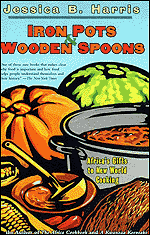
 Dr. Jessica B. Harris discusses the sharing of agricultural knowledge and the complicated culinary implications of the African Diaspora

This wasn’t something he learned in school; it was something he learned from his father, and his father from his father, all by word of mouth. When I think back to the fullness of their citrus trees, weighed down and overflowing with fruit, or to their ability to not only maintain their abundant crops but to share them with others, I started to consider this as fact over folklore.

This all makes me wonder how many other things go unwritten and are eventually lost. Recipes, traditions, names, and full histories can be at risk of becoming null and void until someone takes notice and gives them life for another generation. In Mali, the Griots were the storytellers that shared the land’s history. They were advisors to the king, and they memorized all of a village's significant events—births, death, marriages, seasons, wars—ensuring that the collective culture and lineage of each clan continued. This oral inheritance has been a way of life throughout the African Diaspora for centuries, but who are the storytellers now?

I recently sat down with Dr. Jessica B. Harris, one of these modern storytellers, to discuss our vast, interesting, and colorful history. But that rich color isn’t without pain too, and we also discussed some of the stigmas caught in the misunderstanding of our history. Over a glass of wine, I gifted her some okra seeds in a small silk pouch collected from my family’s garden and soon-to-be homestead in North Carolina. We both took a sip and deeply breathed into my first question:

You made the statement once that African-Americans might be the only people that demonize their own food. What exactly did you mean by that?

Our traditional food comes out of our history, and when I say “our,” I’m talking about "up from the south" African-Americans, who are here not as immigrants but as a result of enslavement. It’s not all of us that demonize our food (I don’t think you do, that’s why you gave me those okra seeds, and I don’t think I do, which is why I’ve got okra on the front of my business card and watermelon on the back) but we often demonize our food, I think, because ours is such a difficult and torturous history.

Because it involves unspeakable pain. Because it involves us making the best of stuff that was not even given to us but thrown at us. It's an easy thing to say, “that's not my food, I don't eat pig's feet.” But the reality is if somebody hadn't eaten that then, we wouldn't be here today. So, we at least need to honor the journey that they had to take and acknowledge that we stand on their shoulders. I am not here to be an advocate for chitlins, but we do have to acknowledge that that's the food that enabled survival then. That food enabled me to be here and eat lamb chops, or for someone to be vegan.

That's the stuff that allowed it to happen, and we should not demonize it.

Sunday, January 1, 2017

Christmas 2016 Sunday Brunch


Blood Red Roses, Red Apples, and Christmas Red Berries, Pines, Center Piece

Menu

Espresso Coffee
Turkey Wrap and Rolls
Cranberry Sauce
Giant Purple Grapes
Mimosa


Turkey Wrap and Rolls with Cheddar Cheese and Cranberry Sauce

Andre Campaign and Tangerine Juice, Espresso Coffee

We all have so much to be thankful for, for Jesus is the reason for the season. For those of us with an empty nest, we can still celebrate by making breakfast as if we are entertaining guests. I’ve made a commitment to myself to put a place setting, with napkins, wine glass, candles, and make enough for whoever may drop by. Cheers 

  • Wrap and Rolls (Turkey, Ham, Roast Beef, Cheddar, Swiss, Provolone Cheese, Herb and Garlic Spread, leaf romaine lettuce, sliced tomatoes, Spinach, Vegetable, Plain Wraps.)  Cherry tomatoes to garnish.
  • Purple Giant Grapes
  • Cranberry Sauce
A Mimosa is a cocktail composed of equal parts champagne and chilled citrus juice, usually orange juice unless otherwise specified. Instead of orange juice, I used tangerine juice from Mariano's fresh-squeezed. 

Ingredients: 2 1/2 oz (1 part) Orange juice, 2 1/2 oz (1 part) Champagne
Preparation: Ensure both ingredients are well chilled, then mix into the glass. Serve cold.
Served: Stirred not shaken
Standard garnish: Cherries, Strawberries, Grenadine
Drinkware: Champagne flute

Friday, January 1, 2016

Black Eyed Peas Keeping Tradition 2016

AKARA-Black Eyed Peas

Akara, also known as Bean Cakes, Bean Balls, Bean Fritas, or Acarajé in Portuguese, is a Nigerian breakfast recipe made with beans. Yes, I put on the traditional food for luck: Black-eyed peas with a ham bone, mixed collard greens with spinach, chicken wings with Caribbean dipping sauce, and buttery corn kernels. I started a corn beef brisket for Saturday with potatoes. Let's have a Happy New Year.

HOME COOK RECIPE: 


Black Eyed Peas

Here is your shopping list:

Ingredients
1 Pkg Dried Black Eyed Peas (or field peas, or cowpeas) - package size doesn't matter
Pork for seasoning: ham hocks, ham bone, or a large piece of ham
1 T salt (will need more)
1 T pepper
1 T cooking oil
1 T Sugar

Instructions
First, sort through the beans to ensure there are no stones. Place the sorted beans in a large mixing bowl or pot, and cover them completely with water, adding a few extra inches above the beans. Soak the beans overnight. 

In the morning, drain the soaking water and transfer the beans to the pot where you will cook them. Add pork for seasoning, then cover the beans with fresh water, ensuring there's an additional few inches above the beans to prevent them from boiling dry. 

Stir in all other seasonings, bringing the mixture to a boil before reducing the heat. Simmer the beans uncovered for several hours. After some time, remove the pork, shred it, and return it to the pot. Continue cooking until the beans are tender. The total cooking time will take at least three to four hours.


globalfoodbook.com


Making Akara- The Nigerian Way

Before frying Akara, remove the skins from the beans. For guidance on this process, refer to how to remove bean skins. It's important to avoid letting salt touch the beans until you are ready to fry them. 

Salt is believed to destroy the leavening properties of beans, which prevents the batter from spattering during frying. To prepare the beans, soak them in water for 2 hours to ensure they become soft enough for your blender. If you’re using the heavy-duty grinders found in Nigerian markets, you won’t need to soak the beans for as long.


Cut the peppers and onions into your desired sizes.


When grinding the beans with your blender, use as little water as possible—just enough to allow the blades to move. Operators of heavy-duty grinders in Nigerian markets typically do not add any water when grinding beans for Akara. The less water you use during grinding, the more the batter will hold together while frying, which reduces spattering. 


Additionally, do not add any other ingredients when grinding the beans for Akara. It is believed that adding other ingredients too early can decrease the ability of the ground bean particles to stick together.


globalfoodbook.com


Set some vegetable oil in the cooker to heat up. The oil should be at least 3 inches deep.

Put some of the ground beans into a mortar. This should be the quantity you can fry in one go.

Stir the bean puree with the pestle in a continuous circular motion. You need to apply some pressure so that you can energize the particles of the bean puree.

This stirring technique releases the gas that will act as a leavening agent to the bean particles, making them rise and somehow stick together. This will be like the yeast making the dough rise in Puff Puff, or what folding does to cake batter.

Keep stirring till the ground beans appear whiter and you can perceive their peculiar aroma.
Add some water till you get the consistency shown in the video below.
Check to make sure the oil is hot. The oil should be hot enough to sizzle but not too hot. If too hot, the Akara will spatter as soon as the bean batter hits the oil.

Once the oil is hot, add the onions and pepper to the bean puree in the mortar. Stir well.
Add salt to your taste and stir again. Salt should always be added just before scooping the bean mixture into the oil. If salt stays in the mixture for extended periods of time, it will destroy the leavening property of the beans. This property is what makes the Akara float in the oil and prevents splatter during frying.

To fry the Akara, scoop the mixture with a tablespoon and slowly pour it into the oil. Dipping the spoon a little bit into the oil helps reduce spatter. Fry the underside till brown and flip to fry the top side too. When the Akara balls are brown all over, remove and place in a sieve lined with paper towels.

Important points to note when making Akara

Follow these, and your Akara will turn out great.

Use freshly peeled beans.
Use a very small quantity of water when grinding.
Smooth the mix with a mortar and pestle before frying.
Add salt just before frying.

Serve Akara with Akamu, Custard, Agidi, or Bread. The best bread to eat in Akara is oven-fresh, hot, and stretchy bread-like Agege Bread. lol!

Making Akara may seem like rocket science, but with practice, you will perfect this recipe. If you do not get it right the first time, try again. Everybody has the same first-time experience with making Akara.