Showing posts with label Soul. Show all posts

Sunday, July 7, 2024

Award Winning Rib Rub for Baby Back Ribs

Award Winning Rib Rub for Baby Back Ribs

The secret recipe!

PREP TIME 5 minutes mins

COOK TIME 5 minutes mins

TOTAL TIME 10 minutes mins 

COURSE Dry Rub CUISINE American CALORIES10 kcal

INGREDIENTS

3/4 c Paprika

1/4 c Granulated Garlic

2 tbsp. Chili Powder

2 tbsp. Salt

1 tbsp. Cayenne

1 tbsp. Cumin

1 tbsp. Black Pepper

2 tsp. Oregano

2 tsp. Onion Powder

1 tsp. Thyme

INSTRUCTIONS

Combine all ingredients in a medium-sized bowl. Apply rub liberally to your baby's back ribs.

Use this rub or either baby back ribs or St Louis-style spare ribs. Apply just enough rub that you can still see some of the meat, pat it into the ribs, and let it stand for at least 30 minutes before placing the ribs in your smoker.

How Long Should the Rub Be on the Baby Back Ribs Before Cooking?

I like to let the rub sit on the meat for at least 30 minutes and up to an hour before the ribs go on the smoker. That is about how long it takes for the salt to draw moisture out of the meat and turn the remaining ingredients into a paste that looks like it is melting into the meat.

Some people like to prep ribs the day before cooking them and let the rub sit on the meat overnight. While there is nothing wrong with letting the rub sit overnight, I have not found that the extended time provides any meaningful benefit.

What Do You Use to Get the Rub to Stick to the Ribs?

You have several options for getting the rub to stick to the ribs.

The first option is to take your time. Sprinkle the rub onto the meat side of the ribs and wait 30 minutes for the rub to melt into the meat before flipping them over and applying the seasoning to the bone side.

You could also use a binder to help the rub adhere. Standard binders include a thin layer of olive oil, yellow mustard, or mayonnaise.

The flavor of the binder does not come through in the finished ribs.

This is a Dry Rub for "Low" and Slow" Ri" s

This rub has two types of sugar, so it should only be used if you cook your ribs at a low temperature.

If you try using this rub for high-heat grilling, the sugars will scorch, and the ribs will come out dark and bitter…and nobody has time for that!

I'm begging you, please don't your ribs.

There are MUCH better ways to get the tenderness you're looking for in a rack of ribs. The method I'm using will also allow you to infuse flavor into your ribs, which boiling does not. I have spent a lot of time researching and practicing ribs. I could write pages about all the details, but for now, I'll stick to the basics of what you need to know to make championship ribs.

Set up your grill for indirect heating (or use your smoker) and remove some fruitwood.

The first step to making a good rib is peeling the membrane off the back. This thin, skin-like covering on the bone side of the ribs prevents flavor from entering. You can ask your butcher to remove it. If you're doing it yourself, use a paper towel and pull it from one end to the other. Once you get it started, it comes off easily.

Let the ribs set, and let that rub soak in marinate for 30 – 60 minutes.

Place the ribs on your grill, far away from heat. Smokers are convenient because they allow you to get great smoke into your ribs without the fear of scalding them. You can still make it work on your grill—just be careful. Keep the temperature in the 225 range. If grilling at high temperatures is your only option, check out this Hot and Fast Baby Back Rib recipe.

We use a variation of the 3-2-1 method for our ribs. Smoke-Wrap-Baste.  The variation is all up to you. How much smoke do you want –  a lot? Then stick to 3 hours. Then 1 hour is plenty. The answer lies in the 1 – 3 hour range, and it's up to your distaste buds to decide.

The next step is to wrap. Easy – just individually wrap them in heavy-duty aluminum foil.

Similar to the first step, the timing is all up to you. I have found wrapping takes at least an hour, usually at most two hours. It's all about getting them to the perfect tenderness—not falling off the bone. If you wanted that, you could have thrown them in a crockpot. Anyone can make them fall off. Your guests will drool with jealousy and amazement when they pull clean from the bone when you take a bite.

The last step is to glaze. If your sauce smears, don't take it easy on your ribs. You don't want to rub it off.

I would like to bring some heat back, so I'll use a spicy sauce here, but it's your preference. I use a spicier sauce and then drizzle a bit of dark brown sugar to balance the flavors. But then again, I really like sugar. And like the other steps, the time is up to you. The longer you leave them on this step, the more firm the sauce will become. 

 If you wish to use the traditional dry Memphis style, skip this step!


Monday, December 26, 2022

VEGETABLE GUMBO


1 cup coarsely chopped onion
½ cup diced green or red pepper
1 –cup sliced celery
4- Tablespoons peanut oil
1 16-0unce whole-kernel corn
1 16-ounce stewed tomatoes
1-Teaspoon salt
¼-teaspoon black pepper
1/8-teaspoon cayenne paper
1 -10 ½ ounce package of frozen sliced okra

In a 3-quart saucepan, sauté onion, green or red pepper, and celery in oil for 5 minutes. Add corn, tomatoes, salt, and black and cayenne papers; cover and simmer over low heat for 30 minutes. Add okra; cover and simmer 10 minutes longer. Makes 4 to 6 servings.


https://www.connoisseurusveg.com/sweet-potato-vegan-gumbo/
 Servings 8
 Author Terry Walters
Ingredients

1 cup uncooked wild rice
3 cups water
3 cups peeled and cubed sweet potatoes
2 tablespoons extra virgin olive oil
1 large yellow onion chopped
4 garlic cloves minced
2 celery stalks chopped
1 large green bell pepper chopped

3 cups cooked kidney beans
1 tablespoon dried thyme
1 tablespoon paprika
½ teaspoon sea salt
¼ teaspoon freshly ground pepper
⅛ teaspoon cayenne
1 ½ cups diced tomatoes with their juices
2 tablespoons tomato paste

1 tablespoon red wine vinegar
4 cups vegetable stock
2 bay leaves
1 tablespoon arrowroot dissolved in 1 tablespoon water
6-8 dashes of hot sauce
½ cup chopped scallions
Instructions

Preheat oven to 400°. Line a baking sheet with parchment paper.
Place wild rice and water in a pot or rice cooker. Bring to a boil, reduce heat and simmer covered until water is absorbed (about 40 minutes). Remove from heat and set aside to cool slightly. Fluff with a wooden spoon when cool.

Meanwhile, place sweet potatoes in a bowl, drizzle with 1 tablespoon of olive oil, and spread in a single layer on a prepared baking sheet. Roast for 20 minutes or until caramelized and soft (time will vary depending on the size of the cubes). Remove from oven and set aside.

In a large Dutch oven over high heat, brown onion, garlic, celery, and bell pepper in the remaining tablespoon of olive oil until soft (3 minutes). Reduce heat to medium. Add kidney beans, thyme, paprika, salt, pepper, and cayenne, and stir. Add tomatoes, tomato paste, vinegar, and vegetable stock and stir to combine all ingredients. Submerge bay leaves and bring the soup to a boil. Reduce heat and simmer for 30 minutes, stirring occasionally.

Add roasted sweet potatoes to the soup and stir in dissolved arrowroot. Simmer for 2 minutes longer, then remove from heat. Discard bay leaves and season with hot sauce.

Place a spoonful of rice in the center of each soup bowl, ladle gumbo around the rice and serve topped with chopped scallions.

Friday, October 28, 2022

GREEN FRIED TOMATOES THE TRADITIONAL WAY


Crispy chicken, collard greens, cornbread, and fried green tomatoes. These are some of the South's most iconic dishes, the last of which has made a name in Hollywood, upscale restaurants, and down-home diners. Fried green tomatoes can be made the traditional way, lightly battered and served alongside a dipping sauce, or dressed up with aioli and herbs. But no matter how you enjoy these crispy treats, there's so much more to fried green tomatoes than meets the eye.

Fried green tomatoes are usually associated with the South, but if you were to look in Southern newspapers or cookbooks before the 1970s, you wouldn't find mention of them anywhere. Jewish immigrants brought this dish to the US in the 19th century, later appearing in Northeastern and Midwestern cookbooks. Fried green tomatoes became popular in the South after the release of  Fried Green Tomatoes at the Whistle Stop CafĂ© and the Fried Green Tomatoes book and movie duo.  

That’s right: fried green tomatoes are not native to the South, but no one loves this dish like  Lowcountry folks.

I want to find a  green fried tomato dish I can brag about and send people to. I want them to be huge, fried to perfection, and served with shrimp and a Cajun tomato cream sauce. I tried them when they were on the menu recently. I ordered them as an appetizer, but they weren't that good, or I'd brag about them in this post. Either way, you'll crave them for weeks to come. I make them when I find homegrown tomatoes or from the farmer's markets.

This is all true but growing up in Fresno, California, my family grew tomatoes in the garden. On Sunday morning, we loved the dish my mother made from these hardy tomatoes that were fresh from the garden, and if they reddened, she made them a sauce and smothered fried chicken over rice. I still make this dish from time to time. 


Wednesday, March 27, 2019

WORKIN' ROOTS: ON THE IMPORTANCE OF A SHARED ORAL HISTORY

Reposted March 20, 2019, original interview by Gabrielle Etienne March 22, 2018

WORKIN' ROOTS: ON THE IMPORTANCE OF A SHARED ORAL HISTORY


A friend of mine who was born and raised on Sapelo Island, in a lush and self-sufficient Gullah community they call “Hog Hammock,” once shared something with me I will never forget. He said the old folks used to say: “You don’t plant anything in the ground until you see the pecan trees bloom.” I asked why the pecan tree and his response was, “it’s one of the oldest and wisest, and it knows when the season’s last frost has hit.”


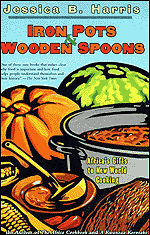
 Dr. Jessica B. Harris discusses the sharing of agricultural knowledge and the complicated culinary implications of the African Diaspora

This wasn’t something he learned in school; it was something he learned from his father, and his father from his father, all by word of mouth. When I think back to the fullness of their citrus trees, weighed down and overflowing with fruit, or to their ability to not only maintain their abundant crops but to share them with others, I started to consider this as fact over folklore.

This all makes me wonder how many other things go unwritten and are eventually lost. Recipes, traditions, names, and full histories can be at risk of becoming null and void until someone takes notice and gives them life for another generation. In Mali, the Griots were the storytellers that shared the land’s history. They were advisors to the king, and they memorized all of a village's significant events—births, death, marriages, seasons, wars—ensuring that the collective culture and lineage of each clan continued. This oral inheritance has been a way of life throughout the African Diaspora for centuries, but who are the storytellers now?

I recently sat down with Dr. Jessica B. Harris, one of these modern storytellers, to discuss our vast, interesting, and colorful history. But that rich color isn’t without pain too, and we also discussed some of the stigmas caught in the misunderstanding of our history. Over a glass of wine, I gifted her some okra seeds in a small silk pouch collected from my family’s garden and soon-to-be homestead in North Carolina. We both took a sip and deeply breathed into my first question:

You made the statement once that African-Americans might be the only people that demonize their own food. What exactly did you mean by that?

Our traditional food comes out of our history, and when I say “our,” I’m talking about "up from the south" African-Americans, who are here not as immigrants but as a result of enslavement. It’s not all of us that demonize our food (I don’t think you do, that’s why you gave me those okra seeds, and I don’t think I do, which is why I’ve got okra on the front of my business card and watermelon on the back) but we often demonize our food, I think, because ours is such a difficult and torturous history.

Because it involves unspeakable pain. Because it involves us making the best of stuff that was not even given to us but thrown at us. It's an easy thing to say, “that's not my food, I don't eat pig's feet.” But the reality is if somebody hadn't eaten that then, we wouldn't be here today. So, we at least need to honor the journey that they had to take and acknowledge that we stand on their shoulders. I am not here to be an advocate for chitlins, but we do have to acknowledge that that's the food that enabled survival then. That food enabled me to be here and eat lamb chops, or for someone to be vegan.

That's the stuff that allowed it to happen, and we should not demonize it.

Monday, January 2, 2017

2017 New Year's Dinner "UMOJA"


Kwanzaa, the seventh day wouldn't be "Imani" without a Sunday dinner for the beginning of a new year. So even though I didn't have guests, I prepared dinner to share the blessing for 2017.

Menu

Red Moscato Wine
Chicken Shrimp Gumbo
Black-eyed Peas in Sweet Meat
Akara
Plantain
Jollof Rice
Mustard/Collard Mixed Greens
Sweet Potato Pie
Strawberry Caramel Cream Cake

Frances Guichard's place setting for Christmas Dinner.
 The Guichards shared a lovely Christmas dinner for family and friends at the gallery. I asked Frances to BYOB her own bowl to fetch the gumbo I was sharing for the New Year.

Christmas Dinner at Gallery Guichard 2016

I made my Chicken Seafood Gumbo but added sweetmeat (smoked). I used Louisiana Cajun Etouffee Base, browned with a cube of butter and 2 cups of water. I boiled the shrimp shells, added a concentrated seafood base, crab boil, and Old Bay seasoning, and added two cups of broth to the etouffee base.

After boiling sweet meat until it was tender, I chopped and deboned the heart and returned to the pot. Next, I bought a rotisserie chicken from Mariano's instead of a fresh one, boiled it down, and deboned it.

I used the sweetmeat in my black-eyed peas to have a smoky-tasting pot liquor, and with the other half of the black-eyed peas, I made Akara fritters. This year I used dried beans instead of fresh black-eyed peas. I added my onions, garlic, eggs, and a little flour to hold them together and fried them in vegetable oil until brown on both sides.

I just love good plantain. I had one sitting for a week, so it would be nice, sweet, and suitable for browning in butter, oil, and sprinkling brown sugar cinnamon.

Heat peanut oil and butter in a large skillet over medium-high heat until the butter begins to sizzle. Gently toss plantain slices with brown sugar, then place into the hot oil. Fry until the plantains turn golden brown, then turn over and continue frying until they have caramelized, about 2 minutes per side.
Uncle Ben's boiled brown rice in a bag came in handy and was suitable for easy clean-up. I added Joloff rice seasoning, which has that west African spice taste.
Jollof rice, also called Benachin, is a one-pot dish popular in many West African countries. It is the progenitor of the Louisianian dish jambalaya. Jollof rice can be served with any kind of meat or chicken.

Thursday, November 26, 2015

Thanksgiving Family Dinner 2015


This year, my two adult children (Sgt. Herbert E. Raney and Jazmin Bruton Davis) took over the kitchen and cooked a full-course meal for Thanksgiving, all the trimmings. They invited everyone to the table to enjoy themselves, including me.  My new granddaughter, Dani, of course, was the center of attention and a very blessed baby girl to be surrounded by so many who serve and protect.

With the invitation going to his airmen from Mooney Air Force Base, for some reason or the other, he didn’t take leave to go home for the holidays and came over for fun, food, football, and some family time.


Deep-fried turkey with garlic injection

Brown Glazed Country Ham with pineapples and cherries

MENU

Baked Mac & Cheese
Potato Salad
Cornbread and Giblet dressing
Collard and Kale Mixed Greens
Green Beans & Potatoes
Dinner rolls
Sweet Potato Pie
Banana Pudding
Cranberry Sauce (garnish)
Chow -Chow (garnish)


Thursday, January 1, 2015

Crab Boil- Georgia Style - Lakeland via Sgt. Raney's House


Southern Style Shrimp and Crab Boil
8 andouille sausages, sliced
8 red potatoes
2 ears fresh corn, cut into halves
4 onions, quartered
1/2 cup seafood seasoning
4 whole Dungeness crabs
Shrimp


Ingredients
6 gallons of water
2 cups salt
4 (3 ounce each) packages dry crab boil
2 tablespoons hot sauce
4 bottles concentrated shrimp and crab boil (liquid crab boil)
16 red-skinned potatoes
8 ears of corn, shucked
12 bratwurst sausages
5 lemons, cut in half
4 medium-sized yellow onions, peeled and quartered
4 heads garlic, halved horizontally
24 scallions, trimmed
5 pounds fresh whole shrimp
5 pounds crab legs
Preparation
Set the kettle with basket insert on high heat, cover, and bring to a rolling boil. Add seasonings.

With the cooking stock at full boil, start by adding the vegetables that will take the longest to cook: the potatoes and artichokes (optional). Cover the pot, bring to boil again, and cook for 7 minutes.

Add the corn, bratwursts, lemons, onions, garlic, and scallions to the pot. Cover and boil again for another 7 minutes. NOTE: It's best to precook the brats ahead of time for a lovely caramelized appearance--and to reduce grease in the boiling pot.

Add the crab legs and shrimp. Tuck the ingredients down into the stock with a wooden paddle and stir. Cover the kettle, and when the stock returns to a rolling boil and the shrimp turn pink, turn off the heat. (If the shrimp and crab boil any longer, they will be challenging to peel.) Remove all ingredients from the pot and serve immediately.


Monday, November 4, 2013

Gullah House

MISS HANNAH’S  grits-and-shrimp CASSEROLE


Heat oven to 350 F. Grease 2-quart baking dish; set aside. In large bowl, combine cooked grits, cooked shrimp, 1 cup cheese eggs, milk, garlic, and (if desired) salt.  Spoon into prepared baking dish, sprinkle with remaining cheese. Bake until set, about 25 minutes. Make 6 servings.


This grits-and-shrimp casserole is a favorite at the Gullah House restaurant.
2 ½ cups cooked grits
1 pound cooked shrimp
1 ½ cups shredded cheddar cheese
2 large eggs
¼ cup milk
2 cloves garlic
1 teaspoon salt (optional)


AUNT BITSY’S PEACHY RICE PUDDING
This comfy dessert is from Elizabeth Leonard of Camden, South Carolina, and Harlem. She’s the aunt and a cooking inspiration of our food-department intern. LaVon James.
2 large eggs
¾ cup granulated sugar
2 cups whole milk
1 teaspoon pure vanilla extract
2 cups hot cooked rice
8-ounce can cling peaches. Cut into large chunks, or 2 cups fresh peaches with their juice
¼ teaspoon ground cinnamon
¼ teaspoon grated nutmeg
Optional garnish: whipped cream

Heat oven to 325F. In large bowl beat eggs; stir in sugar, milk, vanilla, hot rice and peaches. Stir in spices. Transfer to ungreased casserole dish. Bake about 45 minutes. Serve warm or refrigerated about2 hours to chill. Garnish each serving with dollop of whipped cream. Makes 6 servings.