Sunday, March 31, 2019

"Who’s Who of Food and Beverage in America."

Reposted March 20, 2019, for OLD WAYS Oldways is a nonprofit organization helping people rediscover and embrace the healthy, sustainable joys of the "old ways" of shared cultural traditions.
Jessica Harris
Jessica Harris is one of my favorite cookbook authors when I try out recipes for the first time. Although I am profiling her during Women's History Month, I praise and honor Jessica B. Harris because she is "Who's Who of Food and Beverage in America." She gives you the recipe and gives you knowledge in her narratives.
Educator and culinary historian Jessica Harris is the author of twelve cookbooks documenting the foods and foodways of the African Diaspora. Her most recent book is High on the Hog: A Culinary Journey from Africa to America. In addition, she has written extensively about the culture of Africa in the Americas, lectured widely, and made numerous television appearances.
 High on the Hog: A Culinary Journey from Africa to America

Jessica holds a Ph.D. from NYU and is an English professor at Queens College, CUNY. In addition, she consults at Dillard University in New Orleans, where she founded the Institute for the Study of Culinary Cultures. Harris is a founding member of the Southern Foodways Alliance, IACP, and Les Dames d'Escoffier. 
Her articles have appeared in Eating WellFood &; WineEssence, and The New Yorker, among other publications, and she has been profiled in The New York Times. In addition, Harris has spoken about the food of African Americans on The Today Show, and Good Morning America, and at the Museum of Natural History, and has been a frequent guest at Philadelphia's The Book and the Cook. 
In 2004, Harris was awarded the Jack Daniel's Lifetime Achievement Award. She was also recently inducted into the James Beard Foundation's prestigious Who's Who of Food and Beverage in America. To learn more about Jessica, go to www.africooks.com.

OLD WAYS
266 Beacon Street, Suite 1
Boston, MA 02116
EMAIL info@oldwayspt.org

Wednesday, March 27, 2019

WORKIN' ROOTS: ON THE IMPORTANCE OF A SHARED ORAL HISTORY

Reposted March 20, 2019, original interview by Gabrielle Etienne March 22, 2018

WORKIN' ROOTS: ON THE IMPORTANCE OF A SHARED ORAL HISTORY


A friend of mine who was born and raised on Sapelo Island, in a lush and self-sufficient Gullah community they call “Hog Hammock,” once shared something with me I will never forget. He said the old folks used to say: “You don’t plant anything in the ground until you see the pecan trees bloom.” I asked why the pecan tree and his response was, “it’s one of the oldest and wisest, and it knows when the season’s last frost has hit.”


 Dr. Jessica B. Harris discusses the sharing of agricultural knowledge and the complicated culinary implications of the African Diaspora

This wasn’t something he learned in school; it was something he learned from his father, and his father from his father, all by word of mouth. When I think back to the fullness of their citrus trees, weighed down and overflowing with fruit, or to their ability to not only maintain their abundant crops but to share them with others, I started to consider this as fact over folklore.

This all makes me wonder how many other things go unwritten and are eventually lost. Recipes, traditions, names, and full histories can be at risk of becoming null and void until someone takes notice and gives them life for another generation. In Mali, the Griots were the storytellers that shared the land’s history. They were advisors to the king, and they memorized all of a village's significant events—births, death, marriages, seasons, wars—ensuring that the collective culture and lineage of each clan continued. This oral inheritance has been a way of life throughout the African Diaspora for centuries, but who are the storytellers now?

I recently sat down with Dr. Jessica B. Harris, one of these modern storytellers, to discuss our vast, interesting, and colorful history. But that rich color isn’t without pain too, and we also discussed some of the stigmas caught in the misunderstanding of our history. Over a glass of wine, I gifted her some okra seeds in a small silk pouch collected from my family’s garden and soon-to-be homestead in North Carolina. We both took a sip and deeply breathed into my first question:

You made the statement once that African-Americans might be the only people that demonize their own food. What exactly did you mean by that?

Our traditional food comes out of our history, and when I say “our,” I’m talking about "up from the south" African-Americans, who are here not as immigrants but as a result of enslavement. It’s not all of us that demonize our food (I don’t think you do, that’s why you gave me those okra seeds, and I don’t think I do, which is why I’ve got okra on the front of my business card and watermelon on the back) but we often demonize our food, I think, because ours is such a difficult and torturous history.

Because it involves unspeakable pain. Because it involves us making the best of stuff that was not even given to us but thrown at us. It's an easy thing to say, “that's not my food, I don't eat pig's feet.” But the reality is if somebody hadn't eaten that then, we wouldn't be here today. So, we at least need to honor the journey that they had to take and acknowledge that we stand on their shoulders. I am not here to be an advocate for chitlins, but we do have to acknowledge that that's the food that enabled survival then. That food enabled me to be here and eat lamb chops, or for someone to be vegan.

That's the stuff that allowed it to happen, and we should not demonize it.

Monday, March 25, 2019

Game Night Theme Taco Bar


Game Night Theme Taco Bar

Host: Chiquita Lewis is the owner of Yail's Garden


Here at the Phantom Gallery Chicago Loft, we must go all in to make it feel like "Family Game Night" while catering to a new audience of folks having a first-time experience at the gallery.  

The House DJ was the vintage radio cabinet that artist Roger Carter's converted into a sound system, speaker, and blue tooth adapter. Cool and made the perfect sound of a house DJ.

Games played were DOS, Phase 10, Name 5, Can You Name 5? It was a sound mixer, and Chiquita, who never gives herself a birthday party, was treated to Sugar Girl Infused Cookie Bits, which she said is very trendy and in with her guests.

Menu: Jerk Taco Bar & Toppings with a twist of the islands.

Appetizers Street style mini Jerk Tacos, Tortilla Chips & Salsa

Jerk Tacos Bar Topping:

Ground beef in jerk sauce, add seasoning to taste while cooking the ground beef, pour off excess grease.  Warm-up Refried Beans, thin with 1/4 cup of salsa, grill the flour or corn tortilla shells, and melt the cheese before adding the meat and or refried beans.

Condiments:

Grated cheese, Pickled jalapenos, Mild Salsa, Guacamole, Lemon Chile
Lemon and Lime wedges

PUNCH with a Punch 

Fruit Rum Punch: red oranges, pineapple, lemon wedges, lime wedges, red grapes, white grapes
Fruit Tequila Punch: oranges, pineapple, lemon wedges, lime wedges.
Sugar Girl Infused Cookie Bits


This is what you serve when you have young adults with a frugal budget and want the affair to seem like it has endless food. That's why we decided to do a taco bar, serve a refreshing drink that seemed to have unlimited pours without a bartender, or budtender, or catering service doing all the work


Sunday Dinner with Airbnb South Side Passport

There is nothing like planning for Sunday dinner, especially when the guest has just attended worship services and bypassed their own home to come to my home just to meet. Sundays are reserved for family, resting, and getting ready for the workweek.  So, this Sunday, I made an entire course dinner, starting with appetizers and dessert for a special friend who does so much in her community. She is planning a reception and fundraiser to support the Wakanda Conference in July, held here in the Bronzeville Art District.


Guest: Suzetta Whittaker is the co-chair of Airbnb Chicago Southside Passport. She is an active host and business owner of Airbnb and one of the group's founders. She coordinates events and gatherings for the Airbnb owners on the Southside of Chicago. The members meet to discuss policies and support each other's business endeavors in a social environment.

Menu

Appetizer:

Lemon, cucumber, lemon, mint water
Stuffed Hawaiian Bread with Artichoke Jalapeno Dip
Spring Mix Salad with Tomato Basil Dressing, pecan, cranberry

Meal: Smothered Rotisserie Chicken, 

Low sodium Mashed Potatoes
Grilled asparagus
Sparkling White Grape Party Punch

Dessert: Lemon Merage pie


Women's history month I'm celebrating my friends by pulling out all the stops when preparing simple Sunday dinners and asking them to join me for a one-on-one experience.
Let’s all agree that it’s nothing like coming home to a fully prepared meal, starting with appetizers and ending with dessert.

Lemon, cucumber, lemon, mint water


1 cucumber
1 lemon
2 limes
1 bunch of mint
Slice them all and divide the ingredients between four 24 oz. Water bottles and fill them up with filtered water. Drink daily. Not only does this taste delicious and help flush fat, but it also counts toward your daily water intake!

Lemons: Help absorb sugars and calcium and reduce your cravings for sweets.

Cucumbers act as a diuretic and flush fat cells. In addition, it is alkalizing to the body (if you have an alkaline body, no diseases can live there) and increase your energy levels.

Limes promote a healthy digestive tract.

Mint is a natural appetite suppressant that also aids in digestion.


Hot  Artichoke Dip in a Bread Bowl

)


1/4 cup mayo

1/3 cup grated parmesan cheese
1/4 cup Greek yogurt
1 15 oz can quarter artichokes chopped and drained
8 oz cream cheese
1/4 tsp garlic powder
1/4 tsp kosher salt
1/4 cup shredded parmesan cheese
1 KING'S HAWAIIAN® sweet round bread

Instructions from scratch- I used a premade dip omitting all the hard work.
Chop artichokes into small pieces and place them into a large bowl.

Microwave cream cheese in a microwave-safe bowl for 1 minute.
Mix cream cheese, yogurt, mayo, garlic, grated parmesan cheese, and salt.
Add cheese mixture to bowl with veggies and mix together until well combined.
You can cut the middle section out of the bread bowl, leaving a small layer of bread on the bottom so the mixture doesn't leak through.

Could you add the mixture to the center of the bread bowl? Top with shredded parmesan cheese.
Wrap bread bowl sides with aluminum foil (leaving the dip portion uncovered).
Broil in the oven for 1 minute or until cheese is browned and gooey.
Remove from oven and serve with cubed KING'S HAWAIIAN® sweet round bread that you cut out of the middle of the bread bowl earlier.1 jar (6-1/2 ounces) marinated artichoke hearts, drained and chopped.

Grilled Asparagus


Melt butter in a skillet over medium-high heat. Stir in olive oil, salt, and pepper. Cook garlic in butter for a minute, but do not brown. Add asparagus, and cook for 10 minutes, turning the asparagus to ensure even cooking. (I used spray-on olive oil, didn't use the butter, added sea salt to season, and used my grill skillet to make the grill marks on the asparagus.)

2 tablespoons olive oil
1 teaspoon coarse salt
1/4 teaspoon ground black pepper
3 cloves minced garlic
1 pound fresh asparagus spears, trimmed

Smothered Rotisserie Chicken


After trying a similar chicken dish in a restaurant, I re-created it home. I used a rotisserie chicken, to begin with. Then, I used some oxtail broth I had saved, red salsa, jalapeno peppers, and red onions. This savory dish comes together in no time and uses the ingredients I usually have. And since it cooks in one skillet, it's a cinch to clean up!

 But if you are one of those who need to do it from scratch, here is the recipe.
1 cup all-purpose flour
1 tablespoon seasoned salt
1 teaspoon salt
1 teaspoon pepper
3/4 cup 2% milk
8 bone-in chicken thighs (about 3 pounds), skin removed
3 tablespoons olive oil
1 medium onion, chopped
2 jalapeno peppers, seeded and chopped
2 cans (8 ounces each) of tomato sauce
1 cup of water
1 tablespoon chili powder
2 teaspoons garlic powder
2 teaspoons ground cumin

In the same skillet, sauté onion and jalapenos until tender. Add the tomato sauce, water, and spices. Bring to a boil. Reduce heat; simmer, uncovered, for 5 minutes or thickened, stirring occasionally. Pour over chicken and serve on a bed of mashed potatoes.


Sparkling White Grape Punch 

This classy Sparkling White Grape Punch Recipe will be perfect for your next dinner party!


Ingredients
1 bottle (64 ounces) of sparkling white grape juice, chilled.
1-1/2 cups of S. Pellegrino Sparkling Natural Mineral Water
2 liters lemon-lime juice, chilled.
Cane Sugar to taste
Seedless red or green grapes are optional.

Ingredients- to give it a kick,
1 pint of Moscato White Wine
2 liters Ginger Ale, chilled
64 ounces White Grape Juice, chilled
1-1/2 cups white cranberry juice, chilled.

Wednesday, March 20, 2019

Oxtails, Cabbage, Cornbread- for Saint Paddy's Day

Oxtails, Cabbage, Cornbread- for Saint Paddy's Day Sunday Dinner 2019. I'm craving a slow cooker oxtail stew for the weekend. The most effortless way to enjoy hearty oxtail stew or soup for dinner involves tossing all the ingredients into a slow cooker after breakfast then coming back eight to 10 hours later to a complete hot meal.

Oxtails, cabbage, potatoes, tomatoes, over Aunt Martha's Cornbread

Oxtails Guyana one morning my friend June Bobb called to say that her husband Robert, had purchased some oxtails, which she despised, and we pondered over the telephone how to prepare them so that she and Kamau, her son, would be able to eat them with as much relish as her husband did. The result: Oxtails Guyana. The recipe takes the traditional ingredients of that country and adds a Gallie Fillip of red wine. The result was deemed a success by all. Jessica B. Harris
 2 pounds oxtails
1/2 cup cider vinegar (Trust me here if it says 1/2 cup, don't use more, it will ruin the entire dish)
1 large onion, sliced
4 cloves garlic, sliced
1 tablespoon of corn oil ( I used olive oil extra virgin)
1 cup red wine
2 large tomatoes, chopped (I used roasted tomatoes and olive)
1 bay leave
salt to taste
1 tablespoon cassareep (optional the juice of a boiled down shredded cassata flavored with brown sugar, cinnamon, cloves, and other ingredients used in Guyana stews)
4 medium-sized carrots, scraped and diced ( not a fan of boiled carrots)
3 large potatoes, chopped ( I used small gourmet red potatoes)
Jessica says to wash the oxtails with vinegar and place them in a pressure cooker or crockpot. Now here in this recipe, it doesn't say to pour off the vinegar or stew it with the oxtails. I over poured like two cups of vinegar, and then didn't pour off the marinade, but slow-cooked it overnight in the vinegar, onions, and garlic. In the middle of the night,  I removed the oxtails, from the pot and put in the refrigerator, so that the excess grease from the meat would rise to the top and solidify. And also I can save this for another soup. Then I rinsed the oxtails because of vinegary and poured off all but two cups of the liquid from the marinade. (Trying to correct the mistake)
Next, place the oxtails in a skillet with the onion, garlic, and corn oil and cook over medium heat until the onion and garlic are browned.  I flour-coated the meat before putting it into fat to make the base for gravy and put it back into the crockpot to finish stewing with potatoes, sundried tomatoes, and olives. Seasoning to taste.  Cook until tender.


In an article for the "Los Angeles Times," food writer Merle Ellis describes the culinary history of oxtails. In pioneer days, oxen were used primarily as beasts of burden and only slaughtered for their meat after no longer working. That's when people made two discoveries: Oxtails were not only delicious but tasted even better when the male oxen they'd been attached to were castrated -- steers. So even though oxtails now come from cattle, not necessarily males, the name stuck. In the Caribbean, oxtail stew occupies pride of place as a down-home classic. According to cookbook author Jessica B. Harris, the theory is that oxtails were considered throwaway meat given to slaves after the masters had butchered the most desirable cuts for themselves.

If you like beef on the bone but haven't tried oxtails, you don't know what you're missing. Unrivaled for a richness of flavor, oxtails figure in the culinary traditions of many countries, including the UK, Italy, the Caribbean, and throughout Asia. They can be a challenge to find in North American supermarkets; if your local one doesn't carry them, try butchers or grocery stores catering to a West Indian clientele. Tenderizing this tough meat requires lengthy cooking times, but your presence isn't necessarily needed throughout the process.

Traditional Jamaican Oxtails

Oxtails simmered with beans is a traditional Jamaican dish. The recipe can take between four and five hours to cook, but the result is well worth the wait. Oxtails contain 54 percent protein, and one serving of broad beans includes 1 percent of the daily doses of vitamins A and C and 7 percent and 14 percent of your daily calcium and iron, respectively. There are many recipes to choose from, but most are variations.
  1. Prep and chop the scallion, garlic, scotch bonnet pepper, onion, thyme, tomatoes, and carrots. Don't chop them too small. Blanch the broad beans in boiling water for approximately 30 seconds. Put them in cold water to stop the cooking process. Their waxy coatings will slip off. Set the clean beans aside.
  2. Season the oxtails with garlic, scallion, scotch bonnet pepper, thyme, allspice, salt, and pepper.
  3. Add one tbsp. Of oil to a pan and fry the seasoned oxtails for about 10 minutes. Add the water and stir in the chopped carrot, onion, and tomatoes. Turn down the heat and simmer for about three hours. Stir occasionally.
  4. Once the oxtails are tender, add the beans. Simmer for another 30 minutes. Finally, your Jamaican-style oxtails with beans are ready. 
Tip
You can serve it with Jamaican rice and peas, just white rice, or potatoes. If you want the dish to be more healthy, trim the excess fat from the oxtails before seasoning. Add Tabasco to the seasoning for a more profound taste.

I served my oxtails with homemade Aunt Martha's Cornbread.


Ingredients
1 teaspoon Crisco® All-Vegetable Shortening
1 large egg
1 1/2 cups buttermilk OR 1 1/3 cups milk
1/4 cup Crisco® Pure Vegetable Oil
2 cups Martha White® Self-Rising Enriched White Corn Meal Mix OR 2 cups Martha White® Self-Rising Enriched White Buttermilk Corn Meal Mix

Preparation Directions
HEAT oven to 450ºF. Spoon shortening into an 8-inch ovenproof skillet or 8-inch square or round baking pan. Place in oven to heat for about 5 minutes.
WHISK egg in a medium bowl. Stir in buttermilk, oil, and cornmeal mix until smooth. The batter should be creamy and pourable. If too thick, add 1 to 2 tablespoons additional buttermilk. Carefully tilt the skillet to coat the bottom with shortening. Pour batter into the skillet.
BAKE 20 to 25 minutes or until golden brown.
SELF-RISING CORN MEAL VARIATION: Prepare as directed above but substitute self-rising cornmeal for self-rising cornmeal mix and increase buttermilk to 1 3/4 cups or if using milk to 1 1/2 cups.

Steamed Cabbage:


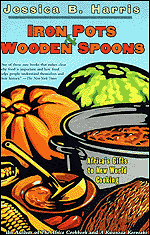
Cabbage is another dish that requires precise cooking to be enjoyed by everyone. I used Braided Cabbage (United States) from Iron Pots and Wooden Spoons by Jessica B. Harris.
1 small head of green cabbage
2 tablespoons bacon drippings (I used olive oil)
Salt and freshly ground black pepper to taste
3 tablespoons of water

Thursday, January 24, 2019

Cuban-style Paella: Paella Cubana

https://www.foodnetwork.com/recipes/cuban-style-paella-paella-cubana-recipe-1940838

Total: 1 hr 50 min
Prep: 40 min
Cook: 1 hr 10 min
Yield: 6 servings

Ingredients
1/2 cup olive oil, plus 2 tablespoons for sautéing seafood
1 cup diced ham
1 cup chorizo sausage or pepperoni, sliced into 1/2-inch pieces (recommended: Spanish sausage)
1 large onion, diced
1 red bell pepper, diced
5 garlic cloves, minced

One 3-pound chicken, cut into 6 to 8 pieces
3 cups Valencia rice
4 cups chicken broth
1/2 cup red wine
1 can mussels
2 teaspoons salt
Bijou powder, a dash
1 pound medium raw shrimp, peeled and deveined
1/2 pound scallops
Meat from 5 lobster tails, reserve shells for garnish
1 cup of frozen green peas
1/4 cup minced parsley leaves
1 red bell pepper, sliced for garnish
1 cup steamed mussels in their shells, for garnish


Directions
Preheat oven to 350 degrees F.
Heat olive oil in a large pan. Sauté the ham and chorizo sausage. Remove from pan and reserve. *
Add onions, red pepper, and garlic to the pan and sauté until wilted but not overcooked.

Add chicken pieces and sauté for about 15 minutes until brown, but not fully cooked. Remove and reserve.

In a large pot combine the rice, broth, wine, and mussels. Add salt for flavor and Bijol for color. Stir. Turn up the heat, bring to boil and cover. Add chicken, ham, and chorizo. Cover and simmer on the stove for 20 to 30 minutes, until the rice is cooked and fluffy. (You may have to add a little more chicken broth if the mixture gets too dry).

Sauté shrimp, clams, and lobster tails separately in the oil. Remove and keep covered and warm.**

At the last minute, fold the seafood into the rice mixture. Transfer to a flat paella pan suitable for serving. Top with peas and red peppers. Place in oven for about 5 minutes to heat through. Take care not to overcook!
Serve garnished with mussels, parsley, and lobster shells.
Cook’s Note

*This will draw the oil from the chorizo and flavor the pan. **This will keep it from drying out.

Reference:
https://www.foodnetwork.com/recipes/cuban-style-paella-paella-cubana-recipe-1940838

Thursday, January 17, 2019

Food Etiquette in Gambia Use Your Right Hand after you Wash Both Hands


This is how I set the Bar up for gatherings, and we all eat from these trays. Funny how this is such a tradition that we do communally. 
But here is another story and how we can take tradition and modernize it without knowing we are doing such.

When a typical Gambian family sits down to eat they do so around a communal bowl that has a mound of rice which might have a sauce on top or mixed rice like Benachin (Jollof Rice) with vegetables in the center. It is then placed on a mat (basing). 

A mound of rice, shaped with a teacup while hot helps builds the mound for individual serving. 

 As an honored guest, you may sometimes be given your own bowl or plate of food to eat depending on the circumstances. Don't be surprised if you are visiting a family and find them eating and be called over to join them for a meal. This is normal food etiquette in the Gambia. 

The first rule about eating food around a communal bowl is to first wash both your hands then take off your shoes before sitting down on the mat. Indeed shoe removal should be done when entering any family room or hallway. You may be offered a short stool to sit on. In strict religious families, particularly up-country and with the Mandinka tribe, women and men eat separately while the kids go to either bowl.

Lobster Tails, over The Ultimate Paella 


Do not start eating until you see your hosts begin eating and they will usually say the Arabic word "Bismillah" which is an idiom meaning "In the Name of Allah". Only use your right hand for eating. If you do choose to eat with a family in this way you shape the rice into an almost egg-shaped one before eating it. You may be given a spoon however, the above procedure should still be followed. Keep your hands to your section of the bowl i.e. the part directly in front of you which is about 10  - 15 cm wide. Don't be afraid to ask for a spoon if you don't think you can handle it because as a guest they are only too pleased to offer you a spoon. 

However, at intervals, you may go to the near center of the bowl to cut a piece of meat or vegetable to bring back to your section and mix it with some rice before putting it in your mouth. Do not eat any food directly from the center. Don't be surprised if people beat you to it and cut it for you and put it in your section.
On a word of caution, it is the height of bad manners in Gambian society to smell food in front of others before eating it. Furthermore, even if you are not hungry it is seen as rude to decline a meal so at least try and take a couple of mouthfuls to eat it slowly. However, should you decide not to eat do not watch others eating; you should move away somewhere else until the others are ready with their meal. 

When eating keep conversation down to the minimum but do mention how delicious the meal is. Any food that leaves the bowl and into your mouth or falls onto the food mat should be left there. You can request for and drink water while eating. Though it sounds odd to westerners a quiet but audible belch after a meal is considered polite as it shows you have enjoyed the food and have eaten to your satisfaction.

Standing around in the host kitchen, amazingly following a tradition, It was loud, cross-talking, and talking going on.

Way too full to get up we sat around and kept talking after dessert was served. 

If you have finished your meal you should get straight up and go wash your hands and do not return to the communal bowl for a chat. If you are an adult then you should try by all means and get up before the children. Wash your hands with soap and water. When all are finished you may again compliment your hosts on how delicious the meal was. 
While in the Gambia you will see some of the above rules being broken but the washing and right-hand rules must be adhered to. 
If you find yourself eating alone and somebody you know approaches you,  it is good manners to tell them "come and join me". Please note that the above rules are for lunch and sometimes dinner. Breakfast, however, tends to be a sole activity normally involving bread though do offer to share if you are in the company of others. 

The usual phrase people use when they are calling you to lunch is "Ky Len Nu Ane" and for dinner, it is "Ky Len Nu Rerr".

Thursday, January 10, 2019

African Fufu Recipe - The Spruce Eats


Nov 19, 2018 - Fufu is an essential food in most of West Africa, and it followed West African slaves when they came to the Caribbean. It can be made with any of the starchy ground provisions like plantains, cassava, or malanga, but this recipe is a bit different—it calls for true yams.

Place the cassava and plantains (with peels on) into a large pot, and fill with enough water to cover. Bring to a boil, and cook until cassava is soft, about 30 minutes; drain. Remove and discard peels from plantains, and return them to the pot. Mash with butter, then beat with an electric mixer until smooth. You can also take a real shortcut if you don't have time, instant mashed potatoes, I learned this from a friend in Sacramento California, Viola Okoro, who married Ebu, and learned all the traditional dishes from her new community of Nigerians living in the USA.


Thursday, January 3, 2019

Gambian Jollof Rice Recipe

Habari Gani - What's The News in Swahili-


I made a list of intentions for 2019. Inner standing and reconnecting with food my ancestors ate are at the top of that list of intentions. You know I enjoy cooking and can make almost anything with a recipe. One day last year, I woke up early and took the train from Bronzeville all the way up to the Wilson Red Line stop. I set out to make Egusi Stew and fish stew using mackerel. I bought all the necessary supplies, was re-insured by the auntie at the African grocery, and headed home. I made those two dishes all day, and they came out horribly inedible. The auntie sold me spoiled fufu, and the smoked fish she gave me overwhelmed my dishes. I was crushed. Since then, I have yet to try to make another African dish.

I decided to make Jollof rice and Yassa Fish a few days ago. I wasn't done cooking until almost midnight, but Ladi patiently waited for me to finish.


It was good AF, and I knew it was fire when Ladi turned to me and said he loved me. 


Cooking this made me feel more connected to the diaspora. Using red palm oil and frying plantains with my hair wrapped up in Ankara is freeing. I want to spend 2019 eating like this!


#JollofRice #Diaspora #Kwanzaa #WhatAfricansEat #SelfLove #SelfCare #Nourishment #Plantains — at Bronzeville, Chicago.


Contributor to Wash Your Hands First Blog:

Adero Knott is the founder of AK Prosthetics and the recent Lupe Fiasco #NeighborhoodStartFund winner. Her 2017 New Year's Resolution is to Get Money.


Gambian Jollof Rice Recipe
COOKING INGREDIENTS: (Fish Jollof Rice):  | (Beef & Chicken) 

1) 2 lbs. fresh fish
2) 2 cups of vegetable oil
3) 6 cups of water
4) 1 medium fresh tomato
5) 4 tbsp tomato paste
6) 2 large onions
7) 1 small cabbage Benachin
9) 2 medium carrots
10) 1 bay leaf
11) 4 cups of rice
12) Salt and pepper to taste

 COOKING METHOD: 
1) Clean and cut fish in halves.  
2) Fry the fish in vegetable oil until both sides are brown.  
3) Remove the fish, add onions and fresh tomatoes, paste them into the hot oil, and fry until brown.  
4) Pour water and bring to boil, then include cabbage, carrots, and bay leaf, add seasonings, reduce heat, and simmer for 20 mins.  
5) Remove vegetables and add the rice while continuously stirring.  
6) Reduce heat and cover the pot. Simmer for 10 mins.
   
*  
Benachin is sometimes called cheebu yap (with meat) / Thieboudiene / chebu jen (with fish). Jollof Rice was invented by a Senegalese woman named Mam Penda Mbaye of the Wolof ethnic group.
   
Beef & Chicken Jollof Rice

 COOKING INGREDIENTS:
1) ½ lb beef
2) ½ chicken
3) 4 tomatoes
4) 1 large bitter tomato (jaxatu / jahatu)
5) Vinegar
6) ½ small cabbage
7) 3 cloves of garlic
8) ½ large eggplant "mock tomato"
9) 3 dry bay leaves
10) 4 large onions
11) Salt
12) 2 peppers
13) ¼ small pumpkin

 COOKING METHOD: 
1) Wash and cut the meat into portions. Mix and season with black pepper, salt, vinegar, and pounded garlic. Leave to stand for 30 minutes before cooking. 
2) Prepare vegetables by slicing them into portions.  
3) Peel, wash and thinly slice the onions.  
4) Wash and skin the tomatoes.  
5) Fry poultry in a pan of hot oil until golden brown, then remove and put aside.  
6) Fry the beef and leave it in a cooking pot. 
7) Fry the onions until brown, insert scalded and skinned tomatoes, and cook & stir occasionally until it is a pulpy consistency.  
8) add tomato puree and pounded peppers, and cook gently for a quarter of an hour. 
9) Add a half cup of water mixed with ®Maggie Cubes, bring to a rapid boil, and place the prepared vegetables, bay leaves, fried chicken, and salt into the pot of meat.  
10) Cook for approximately 20 minutes.  
11) Take out the vegetables and chicken when cooked and place them in the oven on low heat. Leave the beef in the pot and cook for 20 minutes until tender.  
12) Place the washed rice in the pot, add sliced peppers, and bring rapidly to a boil.
13) Reduce the heat and cook for 25 minutes on low heat until most of the liquid is absorbed and the rice is well cooked.  
14) Serve the Jollof Rice on a large platter, and place vegetables and meats on the side.
   
 Reference:
 http://www.accessgambia.com/information/jollof-rice-benachin.html


Saturday, November 10, 2018

Southern Style Cornbread Dressing Casserole

Southern-Style Cornbread Dressing 
Turkey Ham and Sausage Casserole 

I'm making this dish again for Thanksgiving Dinner: Southern Cornbread Dressing. Only after pre-preparation it took me 30 minutes to cook


This traditional Southern cornbread dressing is flavored with onion, celery, and sage. It is super moist and flavorful. Southern Cornbread Dressing is deliciously moist and wonderfully seasoned with sage, onions, bell pepper, and celery.
Course: Side Dish
Cuisine: Southern
Servings: 8 servings
Author: Christin Mahrlig

I made my cornbread using my favorite cookbook, Jessica B. Harris, pages 109 - 110. It is a Southern Black American tradition.


Southern-Style Cornbread Dressing 
Turkey Ham and Sausage Casserole 

1 cup self-rising cornmeal, I used  Goya Harina de Maiz finely grounded
1/2 cup self-rising flour, I used All-purpose Bleached enriched Roundy's
3/4 cup evaporated milk
Two eggs
Two tablespoons of Vegetable oil

Dressing Ingredients
Eight tablespoons butter (1 stick)
Three medium onions, chopped
Four stalks of celery, chopped
1 1/2 teaspoons dried sage
One teaspoon of poultry seasoning
3/4 teaspoon salt
1/2 teaspoon pepper
Three pieces of toast crumbled.
1/2 cup milk
Three eggs, lightly beaten
2 to 2 1/2 cups chicken stock or broth
Two tablespoons butter

Instructions
1. Preheat oven to 400 degrees.
2. In a medium bowl, stir together all ingredients for cornbread. Pour into a lightly greased 9-inch cast iron pan or a 9-inch baking pan. Bake for 20 to 25 minutes. Before using, crumble it into small pieces.
3. Heat butter over medium heat in a large pan. Add celery and onion and cook until soft.
4. Add sage, poultry seasoning, salt, and pepper to the onion mixture.
5. In a large bowl, combine crumbled cornbread and toast.
6. Whisk together milk and eggs and add to the bowl. Stir in 2 cups of chicken broth.
7. Stir in the onion mixture. It should be very moist. If necessary, add more broth.
8. Transfer to a greased baking dish. Cut butter into tiny slivers and scatter on top of the dressing.
9. Bake at 350 degrees for 30 minutes or until it turns light brown on top.

Recipe Notes
Note: The cornbread should be made a day or two in advance, and the veggies should be cut up so you can combine all the ingredients and put them in the oven on Thanksgiving morning.