Wednesday, March 25, 2020

An Immune-Boosting Cider Recipe to Try During Quarantine

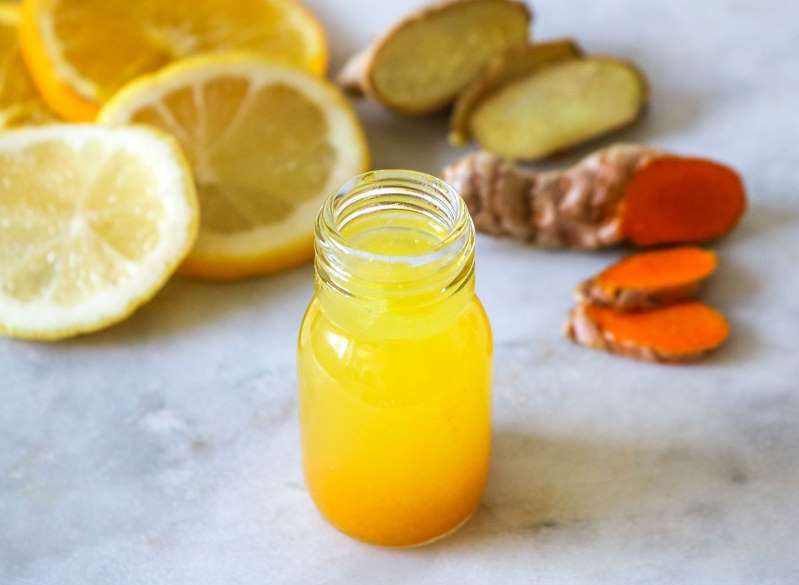
Fire Cider Recipe  original by Rebecca Firkser


Note: If the shot is too potent for your palate, try pouring it over ice and topping it with a splash of seltzer. Alternatively, make a tea with a shot or two of fire cider by pouring boiling water over it.


Fire cider recipe

Ingredients
1/4 cup freshly chopped garlic
1/4 cup freshly chopped ginger
1/4 cup freshly chopped horseradish
2 dried hot chiles, crushed (freshly chopped will also work)
1 Tbsp ground or freshly grated turmeric
1/2 tsp black peppercorns, crushed
1 orange, washed and quartered
1 lemon, washed and quartered
Apple cider vinegar
Honey

How To Make It
Combine garlic, ginger, horseradish, chiles, turmeric, and peppercorns in a clean quart-sized jar. Squeeze orange and lemon into the mixture and add the rinds. Stir well, then press the solids down to firmly pack them.

Pour in apple cider vinegar until the solids are completely covered (but don't fill the jar to the brim). If your jar's lid is metal, cover the top with a square of parchment paper before tightly sealing the lid—metal can react weirdly with vinegar, and no one wants that.
For quick cider: Transfer the jar to the fridge and let it steep for at least 12 hours. Use a wooden spoon to press down on solids to extract as much flavor as possible. Pour about 1 shot of the cider and mix in honey to taste. Take a shot (or a half-shot) every morning or whenever you feel under the weather. Finish within 1 month.

For OG slow cider: Transfer the jar to a cool, dark area in the kitchen, like a pantry or cabinet. Let the mixture steep, gently shaking the jar daily for three weeks. Use a wooden spoon to press down on the solids to extract as much flavor as possible, then strain out the solids and mix in honey to taste. Discard the solids and transfer the cider to the fridge. Take a shot (or a half-shot) every morning or whenever you feel under the weather. Finish within 1 month.


Any time I feel under the weather, I make a large batch of fire cider, an immune-boosting tonic of acidic, spicy things like garlic, ginger, horseradish, chiles, and apple cider vinegar, mixed with fresh citrus juice and honey. I take little shots of it throughout the day, letting its healing warmth run through my body.
© Provided by Eat This, Not That! immune-boosting shot
Similar in flavor to a shrub or a switchel, fire cider is often relied upon by herbalists to stop flu and cold symptoms in their tracks. Though a quick version can be mixed up overnight, a proper batch of fire cider takes a few weeks to brew.

As we work through daily life doing our best to prevent the spread of the novel coronavirus, a combined effort to practice social distancing means you'll have plenty of time to make a big batch of this fire cider. Or make a quick batch for now and an OG slower batch to freeze for later.
And for more quarantine ideas, don't miss these 20 Healthy Foods to Add To Your Coronavirus Grocery List.

What are the health benefits of fire cider?
The spicy components of the drinking aid in decongestion and warm the body; citrus brings immune-boosting vitamin C, while garlic and honey offer antibacterial support. Some believe strongly in the antiviral properties of these ingredients, but as much less research has been produced in that area, put only some of your faith in fire cider. The drink will still soothe a sore throat, clear your sinuses, and warm you to your core.

Though humans have made strong brews with natural ingredients to combat illness for generations, the actual term "fire cider" is widely attributed to herbalist Rosemary Gladstar, who wrote about the mixture in the 1980s. In her 1999 book Rosemary Gladstar's Herbs for the Home Medicine Chest, she recommends making a batch of fire cider as soon as cold and flu season hits (her recipe requires the mixture to rest for three to four weeks to reach utmost potency), and recommends taking a spoonful as soon as symptoms arise.

What goes into making fire cider?
Then, don't wait weeks to drink my fire cider. Because I consider the brew a symptom-soother and not my only form of medicine, I find it perfectly potent after an overnight steep.

Though you'll find one below, there's no authentic "recipe" for the mixture. It's more a matter of what I have and which flavors I want to lean into. More acidic spice? Crank up the amount of freshly grated horseradish. Want it super hot? Double the chiles and add all the seeds. And always add freshly chopped garlic and ginger, lots and lots of it. I don't typically use diced onion, but some swear by it. Then, the citrus: The puckery lemon is just as welcome for a sweeter slant, orange juice, and peel. Turmeric, freshly grated or powdered, and cracked black peppercorns are my favorite additions for a dose of anti-inflammatory agents.
Cram everything into a clean jar and cover with apple cider vinegar. At this point, you could pop the mixture in the fridge and let it sit out overnight.

How to properly brew the cider for weeks
If you're interested in letting your fire cider brew for a few weeks, there are a few things to which you should pay closer attention.

Make sure your jar has a lid that can create an airtight seal. This is the time for a Mason jar, not a repurposed salsa jar. Make sure your pot is fresh-out-of-the-dishwasher sanitized.
Take extra caution to pack down the solid ingredients and cover them entirely with vinegar.
Move the jar to a cool, dark area in the kitchen, like a pantry or cabinet. Let the mixture steep, gently shaking the jar daily for three weeks.


Thursday, December 5, 2019

Soak Your Nuts Cleansing with Karyn

In the month of November, I started my mornings with Turmeric/Curcumin supplements: turmeric in my coffee, and a weekly cleansing of my system. My cousin Cece has sworn that its more than just a kitchen spice, turmeric—and its main compound curcumin—have long held an important place in herbal wellness traditions. It worked for her she was having problems with arthritis and inflammation in her knees, she had to do something to take the weight off.
I can home from New York, took the organic turmeric out of the cabinet and started the journey to save my own life. 
One of the artists here at the Bronzeville Artist Lofts has started a book share library, where books are left out for all to enjoy and contribute as well.  While browsing through I found these two books by Karyn Calabrese, "Cleansing With Karyn", and "Karyn's Conscious Comfort Foods, Vegan Fare". I grabbed them up as tools for my year-long pledge to self that I am going to go through detoxification, healing myself from all these toxins I've put into my body.


A student of Dr. Ann Wigmore and Viktoras Kulvinskas, Karyn Calabrese used raw food and detoxification to heal herself from illness, fatigue, and allergies. Soak Your Nuts: Cleansing with Karyn, features her Nature’s Healing System, a 28-day program that has helped thousands of her students overcome weight issues, skin problems, fibromyalgia, insulin dependence, insomnia, sinusitis, and countless other health problems.

The program is designed to counter the effects of exposure to chemicals, other environmental pollutants, and stress; restore the body’s balance, and revive its ability to rejuvenate naturally.
Instead of dieting and counting calories, readers will learn how to use a raw natural diet, juicing, fasting, and internal cleansing to gain a new awareness of total body health. As a result, they will be equipped with the tools to make intelligent, responsible, health-promoting diet and lifestyle choices. Karyn’s sense of humor and messages of self-love and acceptance make this program a truly holistic journey.

Tuesday, November 26, 2019

Classic Turkey Pot Pie


I am craving, a turkey pot pie this Thanksgiving, and plan on making it this year. Here is a recipe I am dreaming about, you can tweak it for whatever you prepared for thanksgiving using leftover . Alpha
Crust: refrigerated pie crusts are my shortcut, but you can buy this rolled, in a box, or from scratch.
filling ingredients
1/3  cup butter or margarine
1/3  cup chopped onion
1/3  cup all-purpose flour
½     teaspoon salt
¼      teaspoon pepper 
1       can (14 oz) chicken broth
½     cup milk
2 ½  cups shredded cooked turkey
2       cups frozen mixed vegetables, thawed
Steps
Heat oven to 425°F. Make pie crusts as directed on the box for Two-Crust Pie, using a 9-inch glass pie plate.
In a 2-quart saucepan, melt butter over medium heat. Add onion; cook 2 minutes, stirring frequently, until tender. Stir in flour, salt, and pepper until well blended. Gradually stir in broth and milk, cooking and stirring until bubbly and thickened.
Stir in turkey and mixed vegetables. Remove from heat. Spoon into a crust-lined pie plate. Top with the second crust; seal the edges and flute. Cut slits in several places in the top crust.
Bake 20 minutes; cover the edge of crust with strips of foil to prevent excessive browning. Bake an additional 15 to 20 minutes or until the crust is golden brown. Let stand 5 minutes before serving.
THE BACKSTORY
It's hard to find a more comforting dish than a classic pot pie. Sometimes called meat pot pie, the traditional recipe is typically filled with some type of protein, mixed vegetables, potatoes, chicken broth, and flour inside a flaky pastry crust. Surprisingly, the humble pot pie has a colorful history dating back to the Roman Empire, when it was a common dish served at royal banquets. Instead of tender chicken, beef, or turkey, these historical pot pies were often filled with live birds!
Pot pie became a standard dinner in Europe around the 16th century and was later introduced to America by English settlers. Now, pot pie is commonplace and has found a longstanding spot in weekly dinner rotations.
The savory pie has certainly come a long way since its origin, and today there are plenty of different methods to bake the savory meat pie, along with endless twists on the classic recipe. You can make pot pie with biscuits instead of pie crust, make the filling on the stove or in the slow cooker, bake the pie in a casserole dish or pie plate, or even bake it in a skillet or muffin tin!
This dish is easy to adapt by simply swapping out the filling. The flavor options are endless with twists like buffalo chicken pot pie, chili pot pie, or even pizza pot pie. Whatever you're craving, we have every pot pie and casserole recipe you could ever dream of.
Expert Tips
Beat an egg with a spoonful of water and brush it over the top dough before baking for a glossy, golden crust.
Use a small cookie cutter to cut vent holes in the top crust before adding the filling. Attach the dough cut-outs around the edge of the pie using a little beaten egg to adhere.
A ¼ to ½ teaspoon of poultry seasoning, which is heavy in dried sage, stirred into the filling is the natural complement to a turkey pot pie.
Use leftover holiday turkey or a rotisserie chicken for the filling—and if you have leftover roasted or sautéed vegetables (like peas, broccoli, or green beans), coarsely chop them up and stir into the sauce in place of the frozen veggies.


Friday, November 22, 2019

Experimental Station is Making Traditions with Sit Down Meals and Conversation

Experimental Station is making traditions this month over sit-down meals and conversations.
Experimental Station Big Room


Veronica DeFillo in the green shirt and at the head of the table.

I got this email invitation from Matthew Searle (he/him), Assistant Director, Experimental Station.

"Hi Alpha, it happens to be a magnificent week for eating here at the building. Please look at these special opportunities to connect over food and let me know what you can join. Note that these are all sit-down meals rather than chances to take food on the go." Matthew Searle

So, after reading the list, I RSVP for Thursday's lunch with Veronica DeLillo.  
Thursday at 12PM (11/21) - meet a wonderful neighbor, Veronica Defillo, who lives across the street on Dorchester. 

Veronica came to our soup dinner a few weeks ago, and I found out she makes incredible Gumbo in our ensuing conversations. She is making a giant pot of this Gumbo and has invited more neighbors and community stakeholders to come and share this meal in the Big Room.


Veronica is originally from Arkansas. Before migrating to Chicago, her formal education, courtship, and married life were in NOLA. There she learned the culture of cooking Gumbo. It was a family affair where all her in-laws, aunties, cousins came together to make the stew.

The Gumbo was the star of the table.

She recalled it as a festive time, cleaning the seafood, cutting and dicing the vegetables: onions, garlic, celery, bell pepper, parsley, and okra. Each family contributed meats like ham hocks, pork shank, hotlinks, cracked chicken wings, shrimp, and crabs. She didn't share her secret to the Roux with me, but she said she put the okra in last so it would be firm.  Roux (pronounced "roo") is the foundation for many Cajun and Creole recipes, from gravies to sauces and soups to gumbos. Though simple in nature, Roux brings incredible flavor to so many recipes. Roux is a cooked mixture of flour and fat (oil, butter, or lard) used as a thickening agent.

Veronica says she loves to play cards, so making Gumbo was filled with trash-talking, "Bid Whist," "Spades," and lots of whooping and hollering, and some good old family partying and toasting, waiting on the Gumbo to be ready.

Assistant Director, Experimental Station
6100 S. Blackstone Ave., Chicago, IL 60637 USA
office: 773.241.6044; alt: 773.270.2502
experimentalstation.org | FB | Twitter | Instagram

I like a medium to dark brown Roux; I avoid putting tomatoes in my gumbo or anything that looks like a paste. The trick is the timing.
Medium Brown Roux: If you cook the roux for 20 minutes, you will get a medium brown roux that should be the color of a copper pot.
Dark Brown (Chocolate) Roux: When you cook the roux for 25+ minutes, you will end up with a dark brown roux the color of dark chocolate. Alpha Bruton

How to Make a Louisiana Roux: This is the traditional method for making a roux using equal parts of oil and flour.

  • 1 cup oil
  • 1 cup flour
Method of Preparation:
  1. Heat oil over medium heat until hot in a heavy skillet (Cast-Iron Skillet).
  2. Add flour gradually, stirring or whisking, to combine with the oil.

  3. After adding all the flour, reduce the heat to low and cook, frequently stirring. About 45 to 60 minutes or until Roux ranges from a peanut butter color to a dark brown (red-brown or the color of milk chocolate, and has a nut-like odor (it will be very thick and pasty).

  4. This process takes some time, depending on how high the heat on your stove is. The slower, the better, but be ready to remove the skillet from the heat and stir more rapidly if the Roux is too hot.
    If you stop stirring – the flour will burn. So never walk away from the Roux. The secret to getting a perfect roux is to take your time and go constantly.

  5. When done to your liking, immediately remove from heat and set aside.
  6. Carefully transfer it into your stockpot and start making Gumbo or other recipes.

Sunday, May 5, 2019

Sunday dinner: The family tradition we need to bring back

Reposted for: Maskot / Getty Images, May 5, 2019, 10:01 AM CDT, By Ronnie Koenig


Easter Sunday Dinner with Ladipo and Adero


Easter Sunday Brunch - Dinner: April 21st, 2019

Two of my favorite young couple joined me Easter for brunch/afternoon dinner, Adero and I met up in our neighborhood Walmart and planned menu and planned on joining me since our families live out of town.

MENU: 
Chicken and waffles, 
pineapple toast, 
fresh fruit, 
Kale carrot salad, 
deviled eggs, 
Chicken and Waffles, pineapple-toasted strips as appetizers.


Fresh-cut fruit and berries as a centerpiece


Adero picked  me up a beautiful bouquet of flowers  

My favorite celebration punch:

Recipe:  White grape juice, White Sparkling Cider,
Moscato Wine is loaded with fresh fruit, topped off with Champagne.

This is an article I read this morning while planning for the May 2019 Sunday Salon Series, which has been "Sunday Dinner"  since late 2007 when I began this blog spot. Alpha Bruton

Want a way to stay connected to the family? It’s time to bring back the tradition of gathering around the dinner table. A happy multi-generational family toasting drinks at the table during a garden party. 

Studies show that there are cognitive, psychological, and physical benefits of dining together.

When I was a kid growing up on Long Island, Sunday dinner was a thing. We never mentioned it, but everyone just knew that the end of the weekend meant we had a long-standing date with my maternal grandparents. It was a time to hang out at home, visit your relatives, and grab a kosher deli. Back then, the platters of sliced pastrami and whole-sour pickles didn’t hold any special significance to me. But now, as an adult with 100 miles separating me from my nearest family members, I’m realizing the importance of this designated family time.

“The family that eats together thrives together,” says Dr. Vanessa Lapointe, a registered psychologist and parenting expert. “Mealtime has historically been a time of family togetherness. Plus, if you’re getting multiple generations together, then there is a tapestry of diversity in terms of ages and interests, and that is just so good for kids.”


My childhood was influenced significantly by having my grandparents within a short driving distance and my aunt, uncle, and cousin within walking distance. While my seven-year-old twins know and love their family, visits are sometimes few and far between, unless it’s someone’s birthday, holiday, or another special occasion that necessitates a visit. Around the New Year, I decided that this wasn’t ok. After losing my dad a few years ago, I’ve started to realize that these moments together aren’t guaranteed. I wanted our family to be connected and not just in a catch-up-every-once-in-a-while way. So, without telling anyone, I started a Sunday night dinner tradition.

“We’re coming over,” I announced to my mom on the phone one Sunday morning, and within hours, my sister, my cousin, and I descended on her home bearing salad, wine, and all the ingredients to make the Pioneer Woman’s Baked Ziti. (If you haven’t made it, you need to, STAT!) We all have busy schedules — errands to run, work to do, kids to shuttle around — but for a few hours that Sunday evening, we decided to take a break from it all. The best part was that it was for no reason other than it was Sunday. It wasn’t anyone’s birthday or graduation, but there we were, all gathered around the table together.

Anne Fishel, Ph.D., a family therapist and founder of The Family Dinner Project, a non-profit initiative that encourages families to connect over mealtime, tells me that there are numerous benefits of families eating together. “The benefits range from the cognitive ones (young kids having bigger vocabularies and older kids doing better in school) to the physical ones (better cardiovascular health, lower obesity rates and eating more vegetables and fruits) to psychological ones (lower rates of depression, anxiety, eating disorders, substance abuse and fewer behavioral problems in school).”


Fishel says that what’s for dinner doesn’t matter — it’s the communal environment that you create that makes all the difference.

Sunday, March 31, 2019

"Who’s Who of Food and Beverage in America."

Reposted March 20, 2019, for OLD WAYS Oldways is a nonprofit organization helping people rediscover and embrace the healthy, sustainable joys of the "old ways" of shared cultural traditions.
Jessica Harris
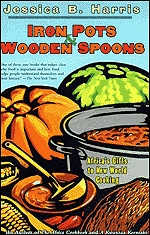
Jessica Harris is one of my favorite cookbook authors when I try out recipes for the first time. Although I am profiling her during Women's History Month, I praise and honor Jessica B. Harris because she is "Who's Who of Food and Beverage in America." She gives you the recipe and gives you knowledge in her narratives.
Educator and culinary historian Jessica Harris is the author of twelve cookbooks documenting the foods and foodways of the African Diaspora. Her most recent book is High on the Hog: A Culinary Journey from Africa to America. In addition, she has written extensively about the culture of Africa in the Americas, lectured widely, and made numerous television appearances.
 High on the Hog: A Culinary Journey from Africa to America. 

Jessica holds a Ph.D. from NYU and is an English professor at Queens College, CUNY. In addition, she consults at Dillard University in New Orleans, where she founded the Institute for the Study of Culinary Cultures. Harris is a founding member of the Southern Foodways Alliance, IACP, and Les Dames d'Escoffier. 
Her articles have appeared in Eating Well, Food &; Wine, Essence, and The New Yorker, among other publications, and she has been profiled in The New York Times. In addition, Harris has spoken about the food of African Americans on The Today Show, and Good Morning America, and at the Museum of Natural History, and has been a frequent guest at Philadelphia's The Book and the Cook. 
In 2004, Harris was awarded the Jack Daniel's Lifetime Achievement Award. She was also recently inducted into the James Beard Foundation's prestigious Who's Who of Food and Beverage in America. To learn more about Jessica, go to www.africooks.com.

OLD WAYS
266 Beacon Street, Suite 1
Boston, MA 02116
EMAIL info@oldwayspt.org

Wednesday, March 27, 2019

WORKIN' ROOTS: ON THE IMPORTANCE OF A SHARED ORAL HISTORY

Reposted March 20, 2019, original interview by Gabrielle Etienne March 22, 2018

WORKIN' ROOTS: ON THE IMPORTANCE OF A SHARED ORAL HISTORY


A friend of mine who was born and raised on Sapelo Island, in a lush and self-sufficient Gullah community they call “Hog Hammock,” once shared something with me I will never forget. He said the old folks used to say: “You don’t plant anything in the ground until you see the pecan trees bloom.” I asked why the pecan tree and his response was, “it’s one of the oldest and wisest, and it knows when the season’s last frost has hit.”


 Dr. Jessica B. Harris discusses the sharing of agricultural knowledge and the complicated culinary implications of the African Diaspora

This wasn’t something he learned in school; it was something he learned from his father, and his father from his father, all by word of mouth. When I think back to the fullness of their citrus trees, weighed down and overflowing with fruit, or to their ability to not only maintain their abundant crops but to share them with others, I started to consider this as fact over folklore.

This all makes me wonder how many other things go unwritten and are eventually lost. Recipes, traditions, names, and full histories can be at risk of becoming null and void until someone takes notice and gives them life for another generation. In Mali, the Griots were the storytellers that shared the land’s history. They were advisors to the king, and they memorized all of a village's significant events—births, death, marriages, seasons, wars—ensuring that the collective culture and lineage of each clan continued. This oral inheritance has been a way of life throughout the African Diaspora for centuries, but who are the storytellers now?

I recently sat down with Dr. Jessica B. Harris, one of these modern storytellers, to discuss our vast, interesting, and colorful history. But that rich color isn’t without pain too, and we also discussed some of the stigmas caught in the misunderstanding of our history. Over a glass of wine, I gifted her some okra seeds in a small silk pouch collected from my family’s garden and soon-to-be homestead in North Carolina. We both took a sip and deeply breathed into my first question:

You made the statement once that African-Americans might be the only people that demonize their own food. What exactly did you mean by that?

Our traditional food comes out of our history, and when I say “our,” I’m talking about "up from the south" African-Americans, who are here not as immigrants but as a result of enslavement. It’s not all of us that demonize our food (I don’t think you do, that’s why you gave me those okra seeds, and I don’t think I do, which is why I’ve got okra on the front of my business card and watermelon on the back) but we often demonize our food, I think, because ours is such a difficult and torturous history.

Because it involves unspeakable pain. Because it involves us making the best of stuff that was not even given to us but thrown at us. It's an easy thing to say, “that's not my food, I don't eat pig's feet.” But the reality is if somebody hadn't eaten that then, we wouldn't be here today. So, we at least need to honor the journey that they had to take and acknowledge that we stand on their shoulders. I am not here to be an advocate for chitlins, but we do have to acknowledge that that's the food that enabled survival then. That food enabled me to be here and eat lamb chops, or for someone to be vegan.

That's the stuff that allowed it to happen, and we should not demonize it.

Monday, March 25, 2019

Game Night Theme Taco Bar


Game Night Theme Taco Bar

Host: Chiquita Lewis is the owner of Yail's Garden


Here at the Phantom Gallery Chicago Loft, we must go all in to make it feel like "Family Game Night" while catering to a new audience of folks having a first-time experience at the gallery.  

The House DJ was the vintage radio cabinet that artist Roger Carter's converted into a sound system, speaker, and blue tooth adapter. Cool and made the perfect sound of a house DJ.

Games played were DOS, Phase 10, Name 5, Can You Name 5? It was a sound mixer, and Chiquita, who never gives herself a birthday party, was treated to Sugar Girl Infused Cookie Bits, which she said is very trendy and in with her guests.

Menu: Jerk Taco Bar & Toppings with a twist of the islands.

Appetizers Street style mini Jerk Tacos, Tortilla Chips & Salsa

Jerk Tacos Bar Topping:

Ground beef in jerk sauce, add seasoning to taste while cooking the ground beef, pour off excess grease.  Warm-up Refried Beans, thin with 1/4 cup of salsa, grill the flour or corn tortilla shells, and melt the cheese before adding the meat and or refried beans.

Condiments:

Grated cheese, Pickled jalapenos, Mild Salsa, Guacamole, Lemon Chile
Lemon and Lime wedges

PUNCH with a Punch 

Fruit Rum Punch: red oranges, pineapple, lemon wedges, lime wedges, red grapes, white grapes
Fruit Tequila Punch: oranges, pineapple, lemon wedges, lime wedges.
Sugar Girl Infused Cookie Bits


This is what you serve when you have young adults with a frugal budget and want the affair to seem like it has endless food. That's why we decided to do a taco bar, serve a refreshing drink that seemed to have unlimited pours without a bartender, or budtender, or catering service doing all the work. 


Sunday Dinner with Airbnb South Side Passport

There is nothing like planning for Sunday dinner, especially when the guest has just attended worship services and bypassed their own home to come to my home just to meet. Sundays are reserved for family, resting, and getting ready for the workweek.  So, this Sunday, I made an entire course dinner, starting with appetizers and dessert for a special friend who does so much in her community. She is planning a reception and fundraiser to support the Wakanda Conference in July, held here in the Bronzeville Art District.


Guest: Suzetta Whittaker is the co-chair of Airbnb Chicago Southside Passport. She is an active host and business owner of Airbnb and one of the group's founders. She coordinates events and gatherings for the Airbnb owners on the Southside of Chicago. The members meet to discuss policies and support each other's business endeavors in a social environment.

Menu

Appetizer:

Lemon, cucumber, lemon, mint water
Stuffed Hawaiian Bread with Artichoke Jalapeno Dip
Spring Mix Salad with Tomato Basil Dressing, pecan, cranberry

Meal: Smothered Rotisserie Chicken, 

Low sodium Mashed Potatoes
Grilled asparagus
Sparkling White Grape Party Punch

Dessert: Lemon Merage pie


Women's history month I'm celebrating my friends by pulling out all the stops when preparing simple Sunday dinners and asking them to join me for a one-on-one experience.
Let’s all agree that it’s nothing like coming home to a fully prepared meal, starting with appetizers and ending with dessert.

Lemon, cucumber, lemon, mint water


1 cucumber
1 lemon
2 limes
1 bunch of mint
Slice them all and divide the ingredients between four 24 oz. Water bottles and fill them up with filtered water. Drink daily. Not only does this taste delicious and help flush fat, but it also counts toward your daily water intake!

Lemons: Help absorb sugars and calcium and reduce your cravings for sweets.

Cucumbers act as a diuretic and flush fat cells. In addition, it is alkalizing to the body (if you have an alkaline body, no diseases can live there) and increase your energy levels.

Limes promote a healthy digestive tract.

Mint is a natural appetite suppressant that also aids in digestion.


Hot  Artichoke Dip in a Bread Bowl

)


1/4 cup mayo

1/3 cup grated parmesan cheese
1/4 cup Greek yogurt
1 15 oz can quarter artichokes chopped and drained
8 oz cream cheese
1/4 tsp garlic powder
1/4 tsp kosher salt
1/4 cup shredded parmesan cheese
1 KING'S HAWAIIAN® sweet round bread

Instructions from scratch- I used a premade dip omitting all the hard work.
Chop artichokes into small pieces and place them into a large bowl.

Microwave cream cheese in a microwave-safe bowl for 1 minute.
Mix cream cheese, yogurt, mayo, garlic, grated parmesan cheese, and salt.
Add cheese mixture to bowl with veggies and mix together until well combined.
You can cut the middle section out of the bread bowl, leaving a small layer of bread on the bottom so the mixture doesn't leak through.

Could you add the mixture to the center of the bread bowl? Top with shredded parmesan cheese.
Wrap bread bowl sides with aluminum foil (leaving the dip portion uncovered).
Broil in the oven for 1 minute or until cheese is browned and gooey.
Remove from oven and serve with cubed KING'S HAWAIIAN® sweet round bread that you cut out of the middle of the bread bowl earlier.1 jar (6-1/2 ounces) marinated artichoke hearts, drained and chopped.

Grilled Asparagus


Melt butter in a skillet over medium-high heat. Stir in olive oil, salt, and pepper. Cook garlic in butter for a minute, but do not brown. Add asparagus, and cook for 10 minutes, turning the asparagus to ensure even cooking. (I used spray-on olive oil, didn't use the butter, added sea salt to season, and used my grill skillet to make the grill marks on the asparagus.)

2 tablespoons olive oil
1 teaspoon coarse salt
1/4 teaspoon ground black pepper
3 cloves minced garlic
1 pound fresh asparagus spears, trimmed

Smothered Rotisserie Chicken


After trying a similar chicken dish in a restaurant, I re-created it home. I used a rotisserie chicken, to begin with. Then, I used some oxtail broth I had saved, red salsa, jalapeno peppers, and red onions. This savory dish comes together in no time and uses the ingredients I usually have. And since it cooks in one skillet, it's a cinch to clean up!

 But if you are one of those who need to do it from scratch, here is the recipe.
1 cup all-purpose flour
1 tablespoon seasoned salt
1 teaspoon salt
1 teaspoon pepper
3/4 cup 2% milk
8 bone-in chicken thighs (about 3 pounds), skin removed
3 tablespoons olive oil
1 medium onion, chopped
2 jalapeno peppers, seeded and chopped
2 cans (8 ounces each) of tomato sauce
1 cup of water
1 tablespoon chili powder
2 teaspoons garlic powder
2 teaspoons ground cumin

In the same skillet, sauté onion and jalapenos until tender. Add the tomato sauce, water, and spices. Bring to a boil. Reduce heat; simmer, uncovered, for 5 minutes or thickened, stirring occasionally. Pour over chicken and serve on a bed of mashed potatoes.


Sparkling White Grape Punch 

This classy Sparkling White Grape Punch Recipe will be perfect for your next dinner party!


Ingredients
1 bottle (64 ounces) of sparkling white grape juice, chilled.
1-1/2 cups of S. Pellegrino Sparkling Natural Mineral Water
2 liters lemon-lime juice, chilled.
Cane Sugar to taste
Seedless red or green grapes are optional.

Ingredients- to give it a kick,
1 pint of Moscato White Wine
2 liters Ginger Ale, chilled
64 ounces White Grape Juice, chilled
1-1/2 cups white cranberry juice, chilled.